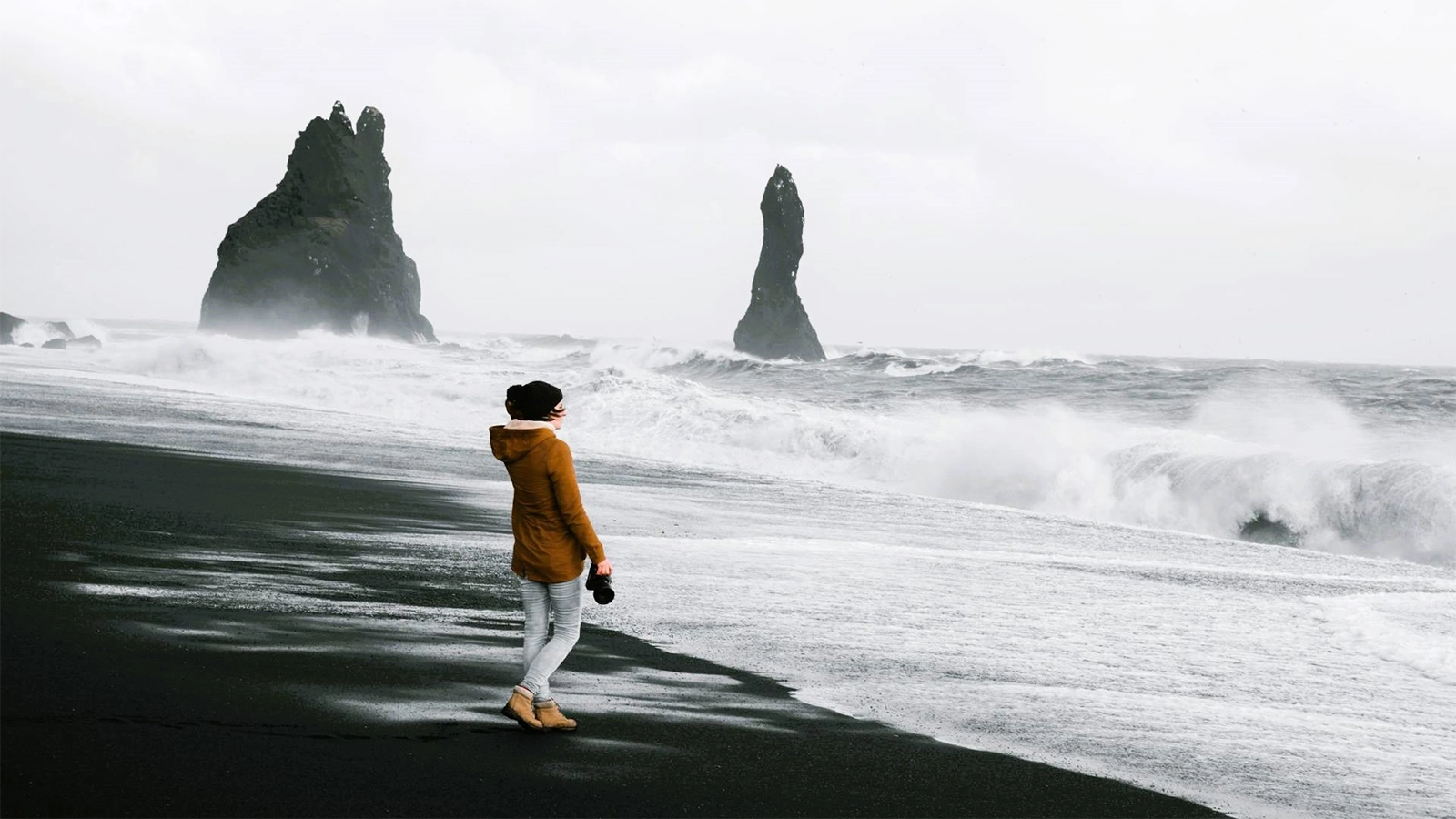
Beyond its glaciers, waterfalls, and volcanic landscapes, Icelandic wildlife is another of the most fascinating things on the island.
Iceland is alive with creatures that have learned to thrive in one of Earth’s most untamed environments. Soaring seabirds, playful seals, majestic reindeer, and elusive Arctic foxes are just a few of the wild residents that make this island so extraordinary.
For travellers, encountering Iceland’s fauna is not just about seeing. It’s about feeling the rhythm of a land where nature still reigns.
Puffins and Seabirds: Iceland’s Feathered Icons
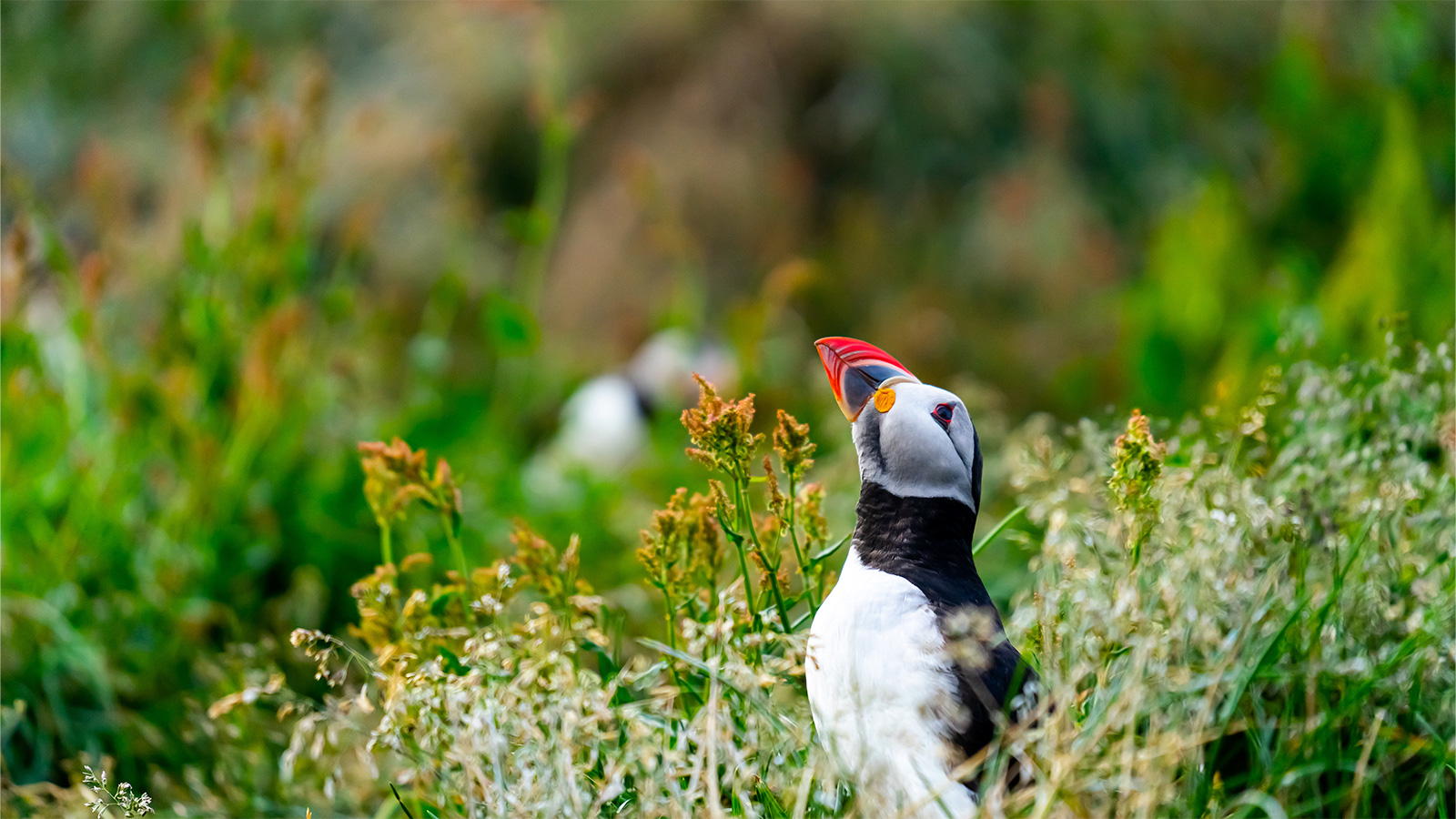
Few animals symbolise Iceland’s charm like the Atlantic puffin. With their colourful beaks and curious expressions, these birds seem to carry a touch of summer sunshine wherever they go. Every year, millions return to Iceland between May and August to nest on steep coastal cliffs. From Látrabjarg in the remote Westfjords to Borgarfjörður eystri in the east… And Dyrhólaey, the dramatic headland on the South Coast. Travelling this route with EastWest, our guests often encounter some of Iceland’s most iconic wildlife. From puffins perched on the cliffs at Dyrhólaey to seals resting along the beaches and Arctic terns gliding above the waves. It’s a journey where the island’s landscapes and its wild inhabitants meet in perfect harmony.
But puffins are just the beginning of Iceland’s avian spectacle. The country is home to over 300 bird species, making it a paradise for birdwatchers.
In the skies above the cliffs soar Arctic terns, the world’s greatest migrators, travelling from pole to pole each year. Northern fulmars glide effortlessly over the waves, while black-legged kittiwakes fill the air with their cries.
In the northern wetlands around Lake Mývatn, birdlife flourishes… Elegant harlequin ducks, photogenic red-necked phalaropes, and the striking barrow’s goldeneye are just some of the stars of this natural stage.
And high above it all, the white-tailed eagle (Iceland’s largest bird of prey) rules the coasts with a wingspan of up to 2.5 metres. The gyrfalcon, the world’s largest falcon, is another rare treasure. It is seen in the Highlands or Westfjords, where its speed and precision in flight are nothing short of breathtaking.
The Arctic Tern: Master of the Skies
Among Iceland’s countless birds, none travel farther or live with more purpose than the Arctic tern (kría), which is a true marvel of migration.
Each year, these small but determined birds make an epic journey from Antarctica to Iceland. They cover nearly 70,000 kilometres round-trip, the longest migration of any animal on Earth. When summer returns to the North Atlantic, they arrive to nest and raise their chicks along Iceland’s coasts, filling the skies with their sharp cries and elegant flight.
Arctic terns are fiercely protective parents. Anyone walking near a nesting colony quickly learns to respect their airspace. They will dive and swoop fearlessly to defend their young, a dramatic display of courage from a bird that weighs barely 100 grams.
One of the best places to observe them is near the Reykjanes Peninsula, where they nest in abundance, or around Jökulsárlón and Flatey Island. Watching them glide effortlessly above the surf, knowing they’ve crossed the planet to return here, is both humbling and unforgettable.
The Arctic tern embodies Iceland itself: wild, free, and resilient, forever following the light.
The Eider Duck: Iceland’s Soft Treasure
If the Arctic tern is Iceland’s traveller of the skies, the eider duck is its quiet homemaker: a bird deeply connected to Icelandic tradition.
Found along the country’s northern and western coasts, these gentle sea ducks are known for their soft, downy feathers (the eiderdown). They are collected sustainably and used to make some of the world’s finest natural duvets and pillows.
What makes this relationship so special is that it’s built on mutual respect. Icelandic farmers and landowners provide safe nesting grounds for the ducks. And protect them from predators and leave them undisturbed during the breeding season. In return, when the ducks migrate away, a small amount of the soft down they leave behind in their nests is carefully gathered. Always without harming the birds or disturbing the colony.
Each duvet filled with eiderdown carries the warmth of a centuries-old bond between people and nature: a true symbol of Icelandic harmony and sustainability.
Eider colonies can often be seen in Breiðafjörður Bay, near the Snæfellsnes Peninsula, or on the small islands off the North Coast. Their low, soothing calls echo over the sea.
Gentle Giants: Whales, Dolphins, and Orcas
Iceland’s surrounding seas are among the richest whale-watching grounds in the world.
From Reykjavík, Húsavík, or Akureyri, travellers can set out on respectful encounters with minke whales or humpback whales. And even, on rare occasions, also blue whales, the largest creatures on Earth. White-beaked dolphins often join the show, leaping through the waves alongside the boats.
In spring and early summer, the orcas (killer whales) often appear off the Snæfellsnes Peninsula, especially near Grundarfjörður. These intelligent and powerful hunters travel in pods, sometimes following schools of herring close to shore. Seeing their black fins slice through the icy water is one of Iceland’s most thrilling wildlife moments.
And in recent years, the Vestmannaeyjar (Westman Islands) have become home to two remarkable beluga whales, Little Grey and Little White. Both were rescued from captivity and now live in a protected bay sanctuary. Their story has captured hearts around the world and they are considered a symbol of Iceland’s growing commitment to marine conservation and ethical animal care.
Arctic Foxes: The Guardians of the island
Small, swift, and endlessly resilient, the Arctic fox is Iceland’s only native land mammal. It has survived here since the last Ice Age: a true symbol of endurance.
Its thick fur changes with the seasons: snowy white in winter, brown or grey in summer, blending perfectly with the tundra and rock.
These foxes can be found throughout Iceland, but sightings are most common in the Westfjords and the Snæfellsnes Peninsula. In the wild Hornstrandir Nature Reserve, they roam freely, unafraid of humans.
Seals: Playful Coastal Dwellers
Along Iceland’s dramatic coastline, seals bring a touch of gentleness to the cold northern seas.
The harbour seal, with its soulful eyes and inquisitive face, is the most common species. Often spotted lounging on rocks or bobbing in shallow bays.
Grey seals, larger and more muscular, are known for their playful flips and dives. Especially around the Vatnsnes Peninsula, a hotspot for seal watching.
Occasionally, lucky visitors may encounter rarer species like hooded seals or ringed seals, drifting from Arctic waters.
One of the best places to observe seals up close is Ytri Tunga Beach on the Snæfellsnes Peninsula. Is a golden-sand shoreline where curious seals rest on the rocks and watch visitors with calm, intelligent eyes.
EastWest’s Snæfellsnes Peninsula tour includes a stop at this stunning beach, giving travellers the chance to experience these beautiful animals in their natural habitat, along with the region’s breathtaking mountains, volcanic craters, and dramatic sea cliffs.
Whether basking on icebergs in Jökulsárlón or swimming near Ytri Tunga, seals always seem to remind travellers to slow down and simply enjoy the moment.
Reindeer: Majestic Wanderers of the Highlands
Introduced from Norway in the 18th century, reindeer have become a proud symbol of Iceland’s eastern wilderness.
Their antlers glint in the summer sun as they roam the open valleys and snowfields of the Eastfjords and Þjórsárdalur Valley. Seeing a herd silhouetted against a pastel Arctic sunset feels almost timeless, like a glimpse of a wilder past.
On Land: The Icelandic Horse
Among all Iceland’s animals, the Icelandic horse is perhaps the most beloved.
Small yet strong, patient yet spirited, it has been a faithful companion to Icelanders for over a thousand years. Its unique tölt gait (smooth, fast, and comfortable) allows it to move gracefully across rugged terrain. Meeting these gentle horses on the road, their manes blowing in the wind, is one of those simple Icelandic moments that stay with you forever.
Responsible Encounters: Respecting the Wild
At EastWest, we believe that true encounters with nature begin with respect.
That means keeping a safe distance, never feeding wildlife, and choosing small-group tours that protect fragile ecosystems. Our guides know how to read the landscape (when to approach quietly, when to wait, and when to simply stand in awe).
Iceland’s wildlife doesn’t perform for visitors. It lives, fiercely, freely, and beautifully. When you watch a puffin soar, a whale breach, or an Arctic fox vanish into the snow, you’re seeing the wild exactly as it should be: untouched and alive.
If you enjoy the outdoors and want to discover more of Iceland’s wild places, take a look at our post about Iceland’s nature reserves, where untouched landscapes, hidden trails, and rare wildlife reveal the island at its most authentic.