
A complete guide to making the most of your week in Iceland
Iceland is the kind of place where every day feels like a journey through another world. Waterfalls tumble over volcanic cliffs, geysers erupt from steaming plains, and glaciers glint under endless skies. But with so much to see, planning a trip here can feel overwhelming.
The good news? Seven days is enough to experience an unforgettable slice of the country. This itinerary will help you discover Iceland’s most spectacular landscapes, from the Golden Circle to the South Coast and the Snæfellsnes Peninsula, while keeping driving times realistic and allowing room for spontaneous stops (because in Iceland, the unexpected is often the best part).
Whether you’re visiting in the light-filled summer or the dark, magical months of winter, this plan offers 7 days full of a perfect mix of natural wonders, cultural highlights, and a few moments of calm amid the wildness.
Day 1. Arrival and Reykjavík
Most international flights arrive at Keflavík International Airport, about 45 minutes from Reykjavík. After collecting your rental car (highly recommended if you want flexibility), take your time driving to the capital.
If your flight lands early, consider stopping at the Blue Lagoon, conveniently located between the airport and the city. A few hours soaking in the milky-blue geothermal water is the perfect way to ease into Icelandic rhythm, especially after a long flight.
Once in Reykjavík, settle into your hotel or guesthouse and spend the rest of the day exploring the compact, walkable city centre.
- Climb Hallgrímskirkja church for panoramic views of the colourful rooftops.
- Wander along Laugavegur, Reykjavík’s main shopping street, dotted with design boutiques, coffee houses, and record shops.
- Stroll down to the Old Harbour to see Harpa Concert Hall, whose glass façade reflects the shifting sky.
For dinner, head out and explore Reykjavík’s lively food scene. You’ll find plenty of great options for every taste and budget. If you’d like some inspiration, check out our post about Traditional Icelandic Food to Eat in Iceland.
And, finally, if you’re not too tired, our recommendation is to end the night with a drink at Kaldi Bar or Kaffibarinn.
Day 2. The Golden Circle
The Golden Circle is Iceland’s most famous sightseeing route, and for good reason. It’s close to Reykjavík, easily doable in a day, and packed with natural wonders.
Start early to make the most of the day:
- Þingvellir National Park is a UNESCO World Heritage Site where you can walk between two continents. The North American and Eurasian tectonic plates drift apart here, creating a dramatic rift valley filled with waterfalls, lava fields, and history. This was the site of Iceland’s first parliament, founded in 930 AD.
- Geysir Geothermal Area is the home to the original Geysir (now dormant) and its lively neighbour, Strokkur, which erupts every few minutes, sending boiling water up to 30 metres high.
- Gullfoss Waterfall is one of Iceland’s most iconic sights, where glacial meltwater thunders into a deep canyon. On sunny days, rainbows often form in the mist.
Optional stops:
- Kerið Crater, a vivid red volcanic crater lake.
- Friðheimar, a greenhouse restaurant famous for its tomato-based dishes (yes… even tomato beer!)
Driving distance: about 230 km round trip.
Return to Reykjavík for the night, or stay overnight in Selfoss or Flúðir if you prefer a quieter countryside base.
Day 3. The South Coast to Vík
The South Coast is where Iceland truly shows off. This stretch combines dramatic cliffs, waterfalls, glaciers, and black sand beaches. And all within a few hours’ drive.
Start your day heading east on Route 1:
- Seljalandsfoss is a tall, elegant waterfall that you can walk behind (bring a waterproof jacket… you will get wet!).
- Gljúfrabúi is a hidden and small waterfall nearby in a narrow canyon; it feels like a secret treasure.
- Skógafoss is another majestic waterfall, wider and more powerful. Climb the staircase beside it for an incredible view of the coastline.
- Sólheimajökull is one of the most popular glaciers in Iceland. If time allows, join a short glacier walk (guided only) to experience the ice up close.
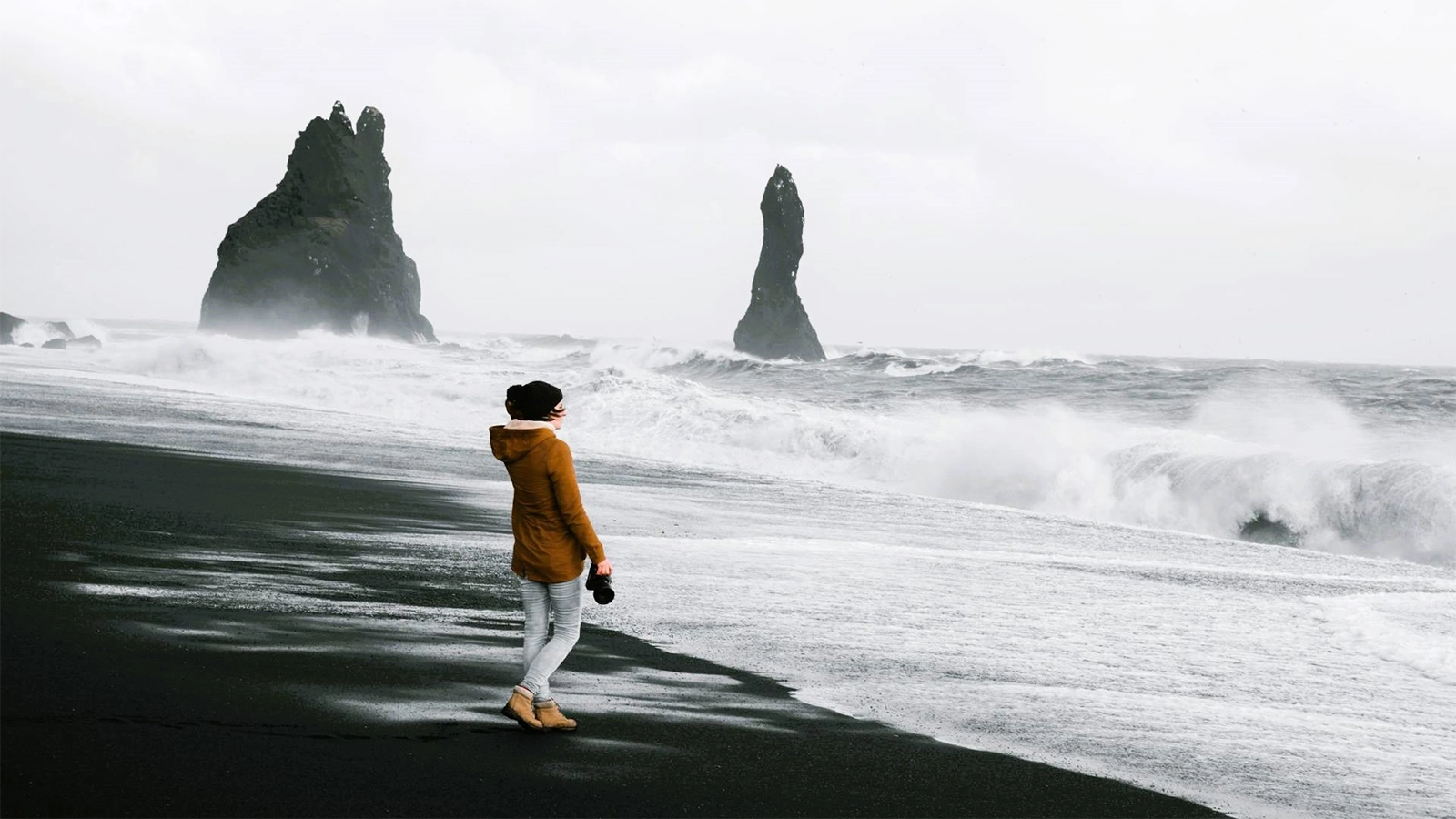
- Reynisfjara Beach is a black sand beach with roaring waves, basalt columns, and sea stacks known as Reynisdrangar. Keep a safe distance from the water — sneaker waves here can be dangerous.
End your day in the village of Vík, surrounded by cliffs and with a few cosy restaurants to choose from, like Suður-Vík restaurant, which also offers breathtaking views, or Smiðjan Brugghús, for craft beer and burgers.
Driving distance: around 190 km.
Day 4. Skaftafell and Jökulsárlón Glacier Lagoon
From Vík, the landscape becomes even more surreal as you approach the edge of Vatnajökull National Park, home to Europe’s largest glacier.
- Fjaðrárgljúfur Canyon is a dramatic gorge near the village of Kirkjubæjarklaustur, carved by glacial meltwater.
- Skaftafell Nature Reserve offers hiking trails for all levels. The walk to Svartifoss, framed by hexagonal basalt columns, is a must.
- Jökulsárlón Glacier Lagoon, where icebergs drift serenely before melting into the Atlantic. Take a zodiac or amphibian boat tour for a closer look.
- Diamond Beach is just across the road; pieces of ice wash ashore and glitter on the black sand like jewels.
Spend the night near Höfn, a fishing town famous for its langoustine dishes.
Driving distance: approx. 270 km.
Day 5. East Fjords or Return Journey
You have two good options today, depending on your travel style and upcoming plans:
Option 1: Explore the East Fjords
If you’re continuing around the Ring Road, drive through the East Fjords, a region of narrow inlets, fishing villages, and towering mountains.
- Stop at Djúpivogur, an artsy coastal town.
- Look out for reindeer grazing in the meadows (common in this region).
- Drive through the winding roads of Stöðvarfjörður and Fáskrúðsfjörður.
This route offers a quieter, more local experience. It is ideal if you enjoy scenic drives and photography.
Option 2: Head Back West
If you prefer to return towards Reykjavík, use this day for a slower journey back.
- Stop again at favourite places you missed or saw briefly on Day 3 or 4.
- Visit Eldhraun lava field, an enormous moss-covered expanse.
- Pause at Kirkjubæjarklaustur or Hella for a relaxing overnight stay.
Day 6. Snæfellsnes Peninsula or West Iceland
If you have time and energy for one last adventure, head north to the Snæfellsnes Peninsula, often described as “Iceland in Miniature” because it contains nearly every type of Icelandic landscape in one region.
Top highlights include:
- Kirkjufell Mountain, the most photographed peak in Iceland, with its perfect cone shape and twin waterfalls.
- Arnarstapi and Hellnar, two charming coastal villages connected by a scenic cliffside path.
- Djúpalónssandur Beach, with black pebbles and the remains of an old shipwreck.
- Snæfellsjökull Glacier, immortalised in Jules Verne’s Journey to the Centre of the Earth.
Alternatively, if you’d prefer a shorter drive, explore West Iceland instead:
- Visit Deildartunguhver, Europe’s most powerful hot spring.
- Bathe in Krauma geothermal baths.
- See the stunning Hraunfossar and Barnafoss waterfalls.
Driving distance: 300–400 km depending on route.
Day 7. Back to Reykjavík and Departure
Your final day can be as relaxed or as full as you like. If you stayed out in the countryside, plan your return drive with enough time to reach Keflavík Airport (allow at least three hours before departure).
If you’re already in Reykjavík:
- Visit Perlan Museum for an interactive overview of Iceland’s nature and a spectacular observation deck.
- Browse Kolaportið Flea Market (weekends only) for quirky souvenirs.
- Enjoy one last meal.
Say goodbye to Reykjavík’s colourful houses and friendly energy before heading to the airport, ideally with a few extra minutes to stop by the Bridge Between Continents or the Reykjanes Lighthouse on your way out.
Practical Travel Tips for a Week in Iceland
Planning your trip to Iceland? If you’re still deciding when to come, have a look at our post about the best time to visit Iceland. It’ll help you choose the perfect season for your adventure.
If your focus is on safety, driving tips, or other practical details, don’t miss our post “Things You Should Know Before Travelling to Iceland.” It’s full of useful information that will make your journey smoother and safer.
And before you start packing, make sure to read “Things to Bring to Iceland: A Packing Guide”. It’s one of those must-reads that will save you time, space, and a few surprises once you’re here!
Final Thoughts
One week in Iceland is a whirlwind, but what a magnificent whirlwind it is! From waterfalls to glaciers, from lava fields to fishing villages, you’ll feel as if you’ve travelled across continents in just a few days.
Take time to pause: watch the clouds move across a glacier, listen to the wind at the edge of a black beach, or soak in a hot pool under the midnight sun. Those moments, the unplanned and quiet ones, are what make Iceland unforgettable.
Whether this is your first trip or one of many, seven days in Iceland is long enough to fall in love with this island of fire and ice… and to start planning your return before you’ve even left.